
The fastest, most reliable way to summarize a textbook chapter is to recall it from memory first, then use an AI tool like AtListen to structure that recall into a clean summary and practice questions. For a typical 30 to 40 page chapter, this hybrid approach takes about 20 to 40 minutes and produces both a usable summary and materials for testing yourself later.
TL;DR:
- Manual recall builds stronger long-term memory but requires more time, making it ideal for foundational or complex material.
- AI tools can quickly condense chapters and generate practice questions but should be used after initial recall to enhance learning.
- The hybrid approach of recalling information first and then polishing with AI offers a balance of retention and efficiency, especially for revising known content.
- Effective summarization relies on breaking chapters into manageable sections, practicing recall, and spacing self-quizzing over time for optimal retention.
- AI-based study tools like AtListen can produce comprehensive study packages quickly, but only if used to complement, not replace, active engagement.
Table of Contents
- Manual, AI-assisted, or hybrid: which method fits your situation
- A step-by-step workflow you can use today
- Why this workflow works: the science behind recall and spacing
- Getting reliable AI summaries without losing the learning benefit
- How AtListen fits into this workflow
- What I'd actually recommend
- Try AtListen for your next chapter
- Sources
- FAQ
Manual, AI-assisted, or hybrid: which method fits your situation
The right method depends on how much time you have and how much you need to remember months from now, not just tomorrow.
Manual active summarization, where you read, close the book, and write from memory, builds the strongest retention because it forces retrieval. It costs more time upfront and requires no software beyond a notebook.
AI-assisted tools trade some of that retrieval benefit for speed. Document summarizers, PDF chatbots, and flashcard generators can condense a chapter in minutes, which helps when you are triaging a stack of reading or reviewing material you already know reasonably well.
The hybrid approach captures most of the benefit of both: you do the recall work yourself, then hand your rough notes to an AI tool to polish, format, and turn into test questions.
- Choose manual when the material is foundational to your grade and you have time to spare.
- Choose AI-assisted when you are reviewing familiar material or need a fast overview before a lecture.
- Choose hybrid for anything you will be tested on later and want to remember past the exam.
A step-by-step workflow you can use today
This sequence works for almost any textbook chapter, dense or light, and it scales up or down depending on how much time you have.
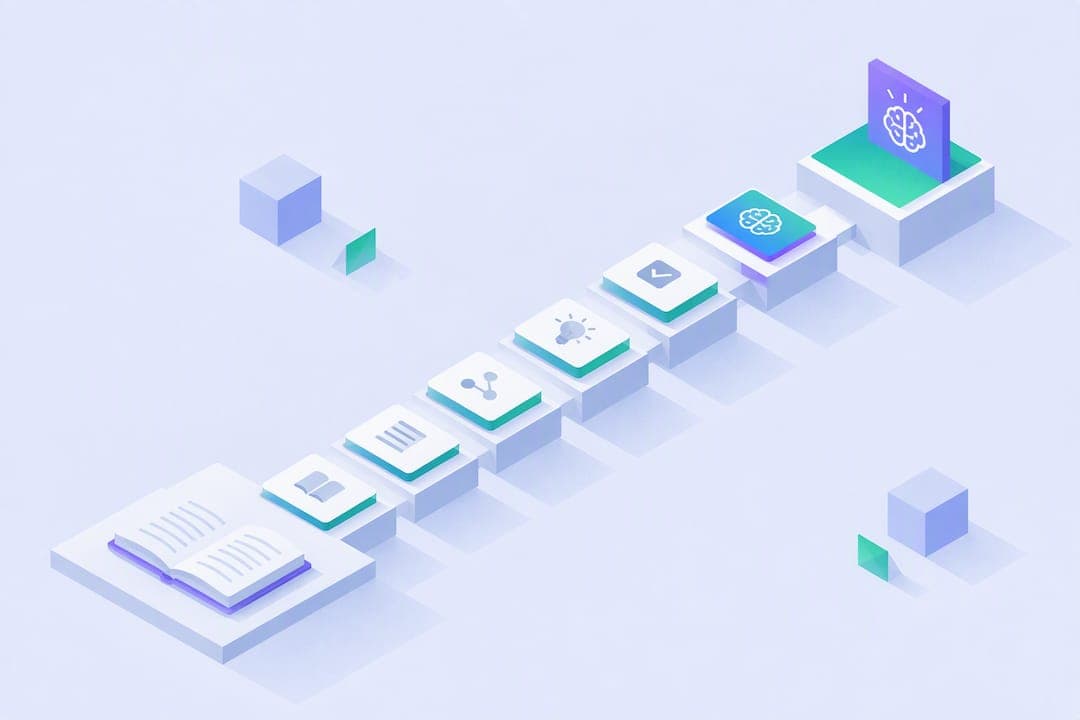
- Preview the chapter. Skim headings, subheadings, bolded terms, and figures for two to three minutes to set expectations for what matters.
- Chunk the chapter. Break it into sections of 5 to 10 pages and set a timer for each one.
- Read one chunk, then close the book. Write a short recall summary from memory before moving on. Research on retrieval practice shows this step produces stronger learning than passive rereading, especially when you put real effort into recalling details rather than glancing back at the page.
- Repeat for each chunk. Small segments with a retrieval step in between reduce the chance you forget the earlier pages by the time you finish the chapter.
- Consolidate. Combine your chunk notes into one to two paragraphs plus 4 to 6 bullet key points that capture the chapter's core argument.
- Convert key points into self-test questions and flashcards. Space your review of these across the coming days rather than cramming them into one sitting.
- Optional AI step. Paste your recall notes into AtListen or a similar tool to generate polished definitions, cross-check facts against the source, and build out practice questions.
Pro Tip: Write your recall summary with the book fully closed, not just out of sight. Even glancing at a page while writing weakens the retrieval effect.
A chunked chapter typically breaks into multiple sections of manageable length, with dedicated time per section for reading and recall, followed by a short period for consolidation and question writing.
Why this workflow works: the science behind recall and spacing
Retrieval based summarizing is not a study hack. It reflects decades of research on how memory actually consolidates information.
A large meta-analysis of 222 studies and 48,478 students found that quizzing improves classroom learning to a medium effect, with the size of the benefit shaped by test format, whether feedback is given, and how many times students repeat the retrieval.
- Testing beats restudying. Recalling information strengthens long-term memory more than reading it again.
- Spacing improves self-assessment. Delaying your judgment of what you know, rather than rating it immediately after reading, produces a more accurate sense of what needs review, a technique the IES practice guide recommends alongside spaced study sessions and regular quizzing.
- Metacognition turns summaries into tests. Paraphrasing and self-questioning are metacognitive skills, and the Cornell Center for Teaching Innovation treats summarization itself as one of these skills rather than a passive writing task.
- Graphics plus text help retention. Pairing verbal summaries with diagrams or figures from the chapter supports comprehension better than text alone.
The practical takeaway: delay some of your self-quizzing by a day, keep the quizzes low-stakes, and pair your written summary with any charts or diagrams the chapter provides.
Getting reliable AI summaries without losing the learning benefit
AI can save real time, but only if you use it after you have already done the thinking, not instead of it.
- Prompt with your own recall notes first. Ask the tool to expand, organize, or format what you already wrote, rather than starting from the raw chapter text.
- Request evidence locations. When a fact or figure matters, ask the model to cite the page or paragraph it came from.
- Verify against the original text. Check AI output against your notes and the source material for oversimplification or invented details.
- Export in test-ready formats. Favor bulleted key points, question-and-answer pairs, and flashcard exports over long paragraphs.
Pro Tip: Treat AI as an editor, not an author. If you can't tell which sentences came from your notes and which the AI added, ask it to regenerate with citations.
On academic integrity, the safest rule is simple: AI should compress and format your own understanding, not replace the work of building that understanding in the first place. Most instructors distinguish between using a tool to organize your thinking and using one to produce work you never engaged with.

How AtListen fits into this workflow
There are tools designed to help transform recall notes into complete study packages by generating summaries, key concepts, practice questions, and flashcards optimized for spaced repetition.
- Depth control features may allow requesting summaries ranging from short overviews to detailed breakdowns.
- Support for multiple input formats can include PDFs, recordings, or notes.
- Automatic generation of questions and flashcards can facilitate self-testing without manual formatting.
- Study plans may be designed to help space review sessions before tests instead of cramming.
A useful test: convert one chapter into a full AtListen study package and compare it against a chapter you summarized by hand. The difference in time spent versus material produced tends to make the case on its own.
What I'd actually recommend

My default is retrieval-first, then AI polish for definitions and practice questions. That order keeps the memory benefit of writing from memory while letting a tool handle formatting, which is the part most students skip when they run out of time.
When you're cramming, skip the full summary and go straight to key points and practice questions. A reasonable weekly routine is two review cycles per chapter: one right after you first read it, one spaced three or four days later, both built around retrieval rather than rereading.
— William
Try AtListen for your next chapter
Skipping the manual formatting step is where most study time disappears, and that's the part AtListen handles once you've done your own recall work. Upload a chapter, set your depth, and get a summary, practice questions, and flashcards back in minutes instead of the hour it might take by hand.

AtListen offers a Free plan to start, with Pro at $19.99 per month and Max at $39.99 per month for higher usage and deeper features. If you're uploading materials involving younger students, AtListen's COPPA policy and security practices cover how that data is handled. Check out the plans and get started on AtListen's landing page.
Sources
- Organizing Instruction and Study to Improve Student Learning (IES practice guide)
- Testing (quizzing) boosts classroom learning: A systematic and meta-analytic review
- Metacognitive strategies | Center for Teaching Innovation (Cornell University)
- Mechanisms behind the testing effect: an empirical investigation of retrieval practice in meaningful learning (PMC)
FAQ
Can ChatGPT summarize a textbook chapter?
Yes, ChatGPT and similar tools can summarize a chapter if you paste in the text or your notes, though accuracy depends on the length and complexity of the material. For best results, verify any facts or figures it produces against the original text rather than trusting the summary outright.
Is there an app that summarizes textbooks?
Several apps summarize textbooks and other study material, including document summarizers and dedicated study tools like AtListen, which turns uploaded chapters into summaries, key concepts, practice questions, and flashcards. The right choice depends on whether you want a quick overview or a full set of study materials.
Where can I find chapter summaries of books?
Chapter summaries sometimes appear in study guide sites or instructor materials, but these are generic and won't match your specific course emphasis. Writing your own summary, or generating one from your own notes with a tool like AtListen, tends to serve exam prep better than a generic summary written for a different audience.
What are the 5 steps to summarizing?
A reliable five-step process is: preview the material, break it into chunks, recall each chunk from memory before rereading, consolidate your chunk notes into a short summary with key points, and convert those key points into self-test questions. This sequence follows recommendations from the IES practice guide on spacing and quizzing for retention.